50 Resume Keywords That Get Past ATS Systems in Tech Hiring (Airwork AI Edition
If you’ve ever sent out dozens of applications and heard nothing back, you’ve met the resume black hole. Most tech resumes never reach a human because the ATS filters them out first.
Tech hiring relies heavily on keyword matching, so even qualified developers and engineers get rejected before anyone reads their story.
That’s where Airwork AI helps both candidates and recruiters with tools that match faster and smarter.
In this guide, you’ll get 50 ATS-ready keywords, real examples, and simple ways to use them so your resume finally gets seen, scored, and shortlisted.
Quick Notes: Fastest Takeaways Before You Dive In
You only need 15–25 targeted keywords to pass most tech ATS systems.
Always mirror the job description phrasing because small wording changes can cost you matches.
Place keywords in 4 spots: Summary, Skills, Work Experience, and Tools/Tech.
Avoid keyword stuffing; natural placement always wins.
Use action verbs and tech skills to show real impact.
Update outdated terms and remove skills you can’t actually use.
Test your ATS score before applying. Airwork AI can analyze your resume in one click.
50 ATS Keywords for Tech Resumes
Tech resumes stand out when the keywords match real job requirements. Below are curated, ATS-ready keyword clusters based on how tech roles are actually described in job postings. These are the terms recruiters and applicant tracking systems search for first.
Software Developer Resume Keywords
Ideal for targeting: software developer, software engineer, and application developer roles.
JavaScript / JS
Python
Java
C++
RESTful APIs
API Development
Version Control (Git)
Microservices
Front-end Developer Keywords
Best for roles focused on interfaces, UI/UX, and modern web apps.
React
. HTML5
. CSS / CSS Modules
. UI Components
. Responsive Design
. Accessibility (WCAG)
Back-end Developer Keywords
Intense matches for roles dealing with server-side logic, data, and APIs.
Node.js
SQL Optimization
SQL Server
REST APIs
CI/CD Pipelines
Server-Side Architecture
Full-Stack Developer Keywords
Perfect for hybrid roles across the front-end + back-end.
MERN Stack / MEAN Stack
API Integration
Cloud Deployment
Containerization
JavaScript Frameworks
Database Modeling
DevOps & Cloud Engineer Keywords
These keywords match roles emphasizing automation, infrastructure, and cloud platforms.
Docker
Kubernetes
Infrastructure as Code (IaC)
AWS / Amazon Web Services
Cloud Security
Terraform
Data Analyst & Data Engineer Keywords
Best for roles in analytics, pipelines, and data infrastructure.
ETL Pipelines
BigQuery
Tableau
Data Modeling
Data Warehousing
Pandas / NumPy
Cybersecurity Resume Keywords
Targeting roles in security operations, threat analysis, and compliance.
Threat Detection
SIEM Tools
Penetration Testing
Zero Trust
Vulnerability Assessment
Incident Response
Additional Tech Keywords Recruiters Expect
High-impact keywords trending across tech roles.
AI Integration
Cloud Computing
System Monitoring
SaaS Platforms
Agile / Scrum
API Testing
How to Add These Keywords Naturally Without Sounding Like a Robot
The secret to using ATS keywords is simple: they should feel like a natural part of your story, not glued onto your resume. A keyword works only when it's placed in the right spot and tied to something you actually did.
Here's how to do that without sounding stiff or robotic.
Start With the Right Placement
Think of your resume as a keyword map. ATS tools scan in a predictable order, so placing keywords where they expect them increases your match score instantly.
Put keywords in these 4 places:
Summary: Use 2–3 high-value keywords tied to your role.
Skills section: Add core tools, programming languages, tech stacks, and certifications.
Experience bullets: Show how you used each keyword to get results.
Tools/Tech section: List platforms (AWS, Docker, Git), frameworks, or databases.
How Many Times Should You Repeat a Keyword?
A good rule of thumb:
2–3 times per primary keyword
1 time for supporting keywords
Too little, and ATS won't detect relevance. Too much, and your resume starts sounding robotic.
Before vs. After: Natural Keyword Integration
Most candidates add keywords incorrectly. Here's what not to do:
❌ Robotic / Stuffed
"CI/CD, CI/CD, GitHub Actions, CI/CD pipelines."
Now the right way is conversational and achievement-focused:
✅ Natural & Effective
"Implemented CI/CD pipelines using GitHub Actions, cutting deployment time by X% and reducing manual errors."
Another example:
❌ "Worked with cloud computing tools and AWS."
✅ "Deployed microservices on AWS and optimized cloud computing costs by X%."
Use This Simple Keyword Integration Formula
You can add any tech keyword naturally using this template:
[Action Verb] + [Tech Skill/Tool] + [What You Did] + [Impact or Result]
Examples:
"Optimized API performance to reduce response times by X%."
"Designed React UI components used across X major product releases."
"Automated deployments using Docker and improved environment consistency."
Once you follow this pattern, keywords stop feeling forced and instead become part of your accomplishments.
Common Mistakes That Kill Your ATS Score
Even the best candidates lose interviews because of small keyword mistakes. These errors confuse ATS systems, lower your match score, and make your resume look unnatural to recruiters.
Here are the most common pitfalls to avoid.
Keyword Stuffing
Repeating the same keyword 5 different ways doesn’t help. It makes your resume sound robotic and can trigger ATS penalties. Always aim for natural placement, not repetition.
Adding 500+ Skills Instead of the Right 20
ATS doesn’t reward long skill lists. It rewards relevant skills. Focus on the core technologies, frameworks, and tools directly mentioned in the job description.
Using Outdated Tech Terms
Hiring teams don’t search for Flash, Silverlight, or legacy frameworks. Update your keywords to match modern tech stacks, cloud tools, and current development practices.
Not Matching Job-Description Phrasing
If the posting says “React.js” and you only write “React,” you might miss a match. Always mirror the company’s wording when it accurately reflects your real experience.
Using Fancy Resume Templates That Break ATS
Columns, text boxes, graphics, icons, and PDF exports from design tools often cause parsing errors in ATS. Keep your layout simple so your keywords are easy to read.
Listing Tools You’ve Never Used
You might get past the ATS, but you’ll fail the technical interview. Only include keywords you can confidently explain or demonstrate.
Using Only Soft Skills Instead of Hard Skills
“Team player,” “hardworking,” and “motivated” don’t help you rank. ATS systems prioritize hard skills such as Python, SQL, Docker, and React. Lead with technical keywords first.
Hiding Keywords at the Bottom of Your Resume
ATS scans top to bottom, and recruiters skim even faster. If your best keywords appear only in your skills section, you’re missing out. Spread them across your summary and experience bullets.
Fixing these mistakes immediately boosts your ATS score. It makes your resume far more attractive to both human and automated tech recruiters.
How Airwork AI Helps You Pass ATS in One Click
Once you know how important the right keywords are, the next challenge is using them correctly without spending hours rewriting your resume for every tech job. That’s where Airwork AI makes the process simple, fast, and accurate.
Airwork AI automatically extracts the exact keywords from any tech job description, so you never have to guess what the ATS is looking for. With one click, you get an instant ATS score showing how well your resume matches the role.
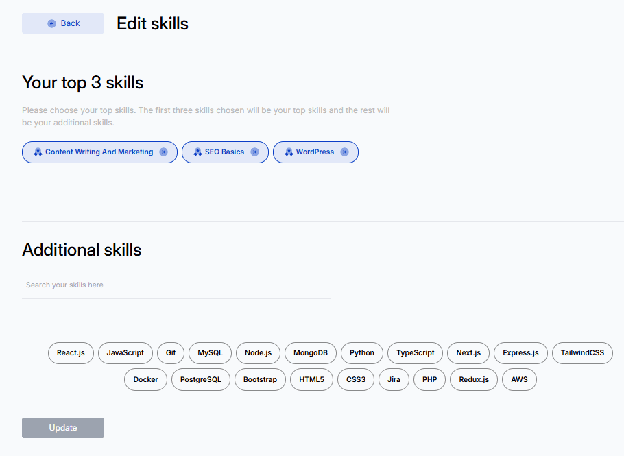
If you’re missing key tech skills, tools, or frameworks, the platform highlights them instantly. It even suggests the right phrasing and rewrites your bullet points so your keywords sound natural, not forced.
As you edit, Airwork AI provides real-time keyword optimization to keep you aligned with the job description. On the employer side, companies can use the same system to score candidates more accurately, thereby speeding up the hiring process and making it fairer.
The best part?
Airwork AI creates a single ecosystem where hiring and getting hired finally work together, reducing guesswork for candidates and helping teams find qualified talent faster.
FAQs
What are resume keywords?
Resume keywords are the specific skills, tools, job titles, and qualifications that match what an employer lists in a job description.
What is an ATS scan?
An ATS scan is an automated review conducted by an Applicant Tracking System (ATS).
What are ATS resume keywords?
ATS resume keywords are words and phrases the ATS is programmed to detect, such as programming languages, frameworks, certifications, methodologies, and role-specific skills.
How many keywords should I include in my resume?
Most tech resumes perform best with 10–20 relevant keywords, placed naturally across your summary, skills, and experience sections.
Which file format is best for ATS?
DOCX is the safest and most ATS-friendly format.
Do recruiters actually use keyword filters?
Yes. Nearly all recruiters use keyword filters to quickly narrow down applications.
Can I use the same resume for multiple applications?
You can, but it’s not recommended. Each job posting has unique keywords. A resume that isn’t tailored often scores low in ATS matches.
What is resume keyword stuffing?
Resume keyword stuffing is the practice of repeating keywords unnaturally to manipulate ATS scoring. It makes your resume robotic, triggers ATS penalties, and is easily caught by human recruiters.
Your Resume Only Needs the Right Keywords
Keywords get your resume noticed, but your real experience is what gets you hired.
The goal is to make your skills clear, authentic, and easy for both ATS and hiring managers to understand.
Stay honest, stay focused, and keep your resume simple and strategic.
If you want global remote opportunities, create your Airwork AI profile and get matched faster.