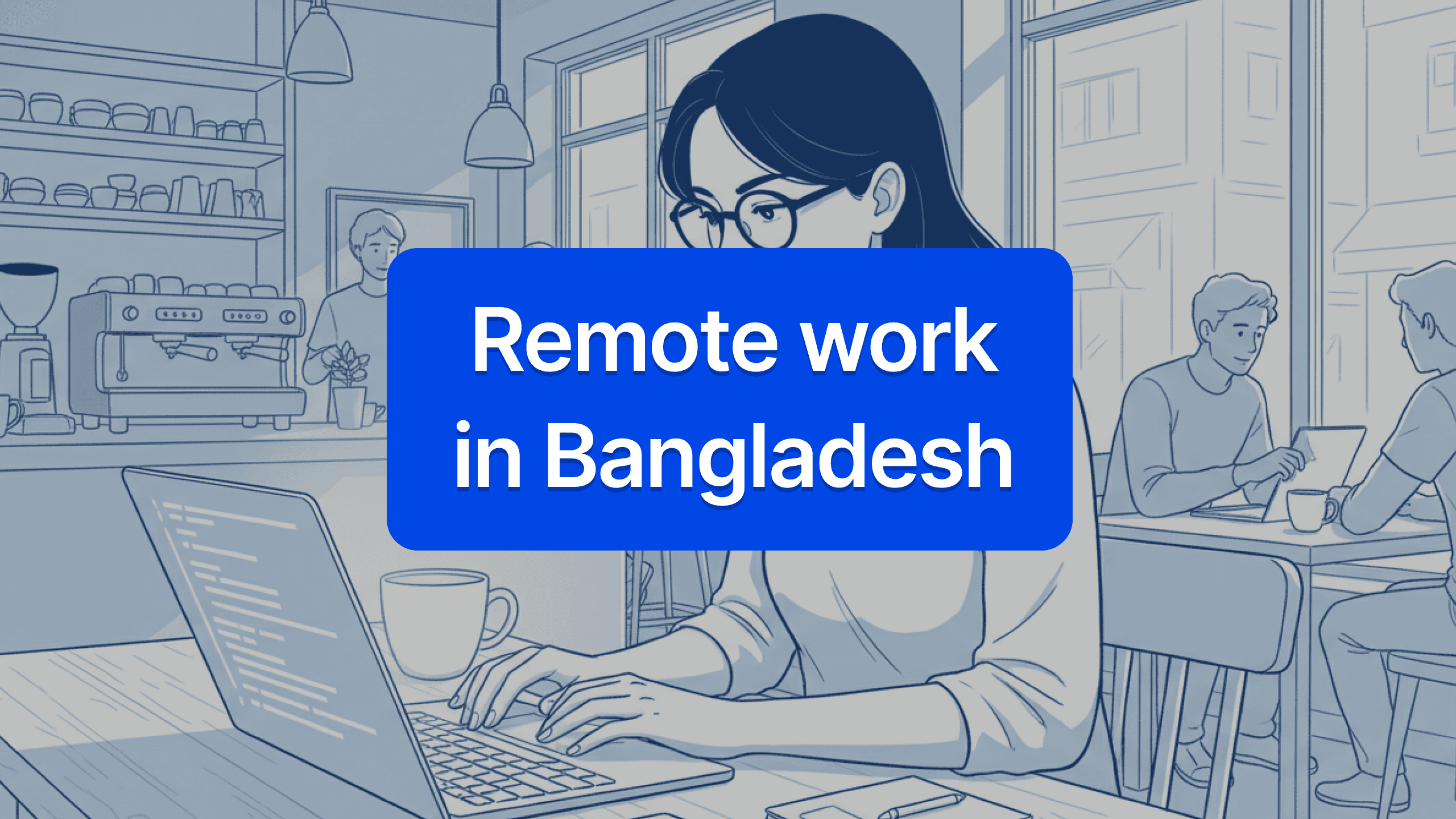
Remote Work Trends in Bangladesh: What Employers Need to Know
Bangladesh has become a major destination of remote work due to its reputation of having a good working environment. Having more than 26 million youths in the labour force aged 15-29 years and an ever-increasing source of digital talent, the country has a youthful labour force that is eager to undertake international opportunities. The access to the internet has also been growing at a high rate as more than half the population is online and 4G coverage of the country has enabled people to access the internet. With these capabilities, Bangladesh is becoming attractive to global remote workers and gaining the focus of global enterprises.
Recruitment trends for 2025 show a shifting local remote landscape. It’s important to understand these changes. Employers and hiring managers can use this knowledge to better attract talent. This way, they can reach the growing market with greater success.
1. The emergence of remote software engineering work.
Remote software engineering jobs have surged in Bangladesh. This shift is one of the most noticeable changes in the job market. Every year, about 20,000 to 25,000 students graduate in Computer Science and related fields from local universities. Many of them want to work for international companies. Bangladeshi developers are being employed by a greater number of employers to:
Back-end development and end-to-end development.
Mobile app development
Product engineering, UI/UX.
QA automation and DevOps jobs.
This is a trend brought about by good remuneration, command of English language and good technical backgrounds. This talent is acquired earlier, and through accessing it, organizations are placed ahead of the rest.
2. New Recruitment Trends for 2025
Recruitment trends for 2025 are emerging in Bangladesh. Hiring patterns are shifting globally.
Employers place greater emphasis on ability and results rather than on degrees.
Project-based contracts : Short-term and gig projects are growing in popularity, especially in tech.
Hybrid recruitment models : Companies blend local jobs with international hires through remote offices. This helps reduce costs and improve teamwork.
Employer Branding : Skilled workers want a clear value proposition. They also seek flexible work options and opportunities for career growth.
These trends show that we need a new way to hire. Both agility and candidate experience are as important as technical vetting.
3. How hiring managers can change.
Hiring managers must change how they connect with remote workers in Bangladesh. Some key actions include:
Work with Bangladeshi job boards.
Partner with tech communities.
Connect with university placement cells.
Offer flexible work options: Remote workers value independence. They focus on results rather than fixed hours.
Use data-driven solutions: Be a savvy recruiter. Track candidate performance, retention, and hiring efficiency with an analytical approach.
Create strong onboarding practices.
Set up a formal orientation and mentoring.
Provide training programs.
Use communication tools to help remote employees adjust.
By following these steps, hiring managers can build teams that are dependable, affordable, and ready to take on what’s next.
4. Use of technology for intelligent recruitment.
Technology centers successful talent acquisition in a remote-first world. Manual hiring consumes excessive time and complicates the management of cross-border recruitment.
Here is where the media, such as Airwork, comes in. Airwork is a smart recruiting tool that enables companies to:
Concentrate on sourcing candidates through various sources.
Automate interview scheduling and interview feedback.
Cooperate with employment departments on the fly.
Track the most important recruitment measures in a single dashboard.
The free hiring platform helps employers reduce miscommunication. It also speeds up the hiring process. This also creates a smooth experience for candidates. This is crucial in competitive talent markets like Bangladesh.
5. The Road Ahead
The remote work environment in Bangladesh is emerging. As international firms grow more interested, local professionals want a global presence, too. This means that competition for top talent will be tougher in the coming years.
Employers who adapt quickly to early changes will lead the way. They need to understand local trends. They should change recruitment for 2025. Also, they must invest in smart solutions. This will help them build productive remote teams in Bangladesh.
The speed at which companies adopt tech-driven hiring will shape their success. The borderless work environment is coming, and Bangladesh wants to join in.
Conclusion
Bangladesh has long been part of the international remote work scene. It’s now a hub for top tech talent. In 2025, recruitment trends are changing how companies build distributed teams. To stay relevant, hiring managers must adapt their talent acquisition processes.
Employers can seize many opportunities by using smarter tools like Airwork. This helps them recruit better. They should also focus on skills, flexibility, and culture to succeed. Leaders can build flexible, innovative teams by tapping into Bangladesh’s remote talent. This approach supports long-term success.